
Recycled and Chlorine Resistant Swimwear Fabrics: What to Know Before You Develop
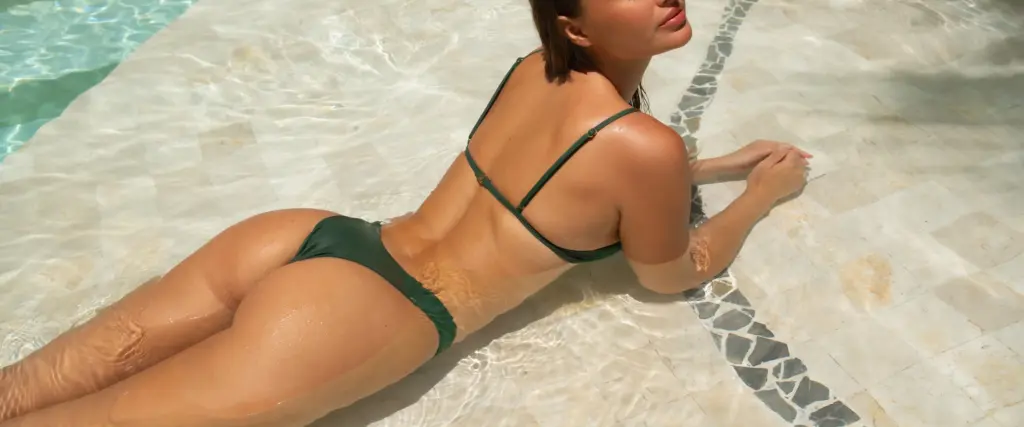
Recycled and Chlorine Resistant Swimwear Fabrics: What to Know Before You Develop Choosing the right swimwear fabric is not just about colour or appearance. For many brands, two of the biggest priorities are sustainability and durability. That usually leads to the same questions: should you use recycled swimwear fabric, and how important is chlorine resistance?This guide explains how recycled and chlorine resistant swimwear fabrics work, and what to consider when choosing the right fabric for your collection. Why fabric matters in swimwear Swimwear fabrics need to do several things well. They need to stretch, recover, feel comfortable, and hold up through wear. Depending on the product, they may also need to support sustainability goals or handle repeated exposure to chlorine.That means fabric choice affects: fit durability comfort product quality brand positioning What is recycled swimwear fabric? Recycled swimwear fabric is usually made using recycled nylon or recycled polyester blends, while still offering the stretch needed for swimwear.Many brands choose recycled fabrics because they want a more responsible fabrics option without changing the overall look and feel of the garment.Recycled swimwear fabrics can work well for all types of swimwear designs, reversible or seamless swimwear designs. What chlorine resistant swimwear fabric means Chlorine resistant swimwear fabricsChlorine resistant swimwear fabrics are designed to help maintain elasticity and colour when garments are regularly exposed to chlorinated pool water.They are most commonly used for swimwear worn frequently in pools, training swimwear, styles intended for regular water exposure, and swimwear that may also be worn in hot tubs or thermal spas.For many fashion swimwear brands, chlorine resistance is not always the main priority. Fabric softness, stretch recovery and body shaping are often more important. However, fabrics with good chlorine resistance can help maintain appearance and performance over time.It is also worth checking the manufacturer’s fabric page to confirm the material is suitable for chlorine and salt water exposure. Can a fabric be both recycled and chlorine resistant? Yes, in some cases it can. Some recycled swimwear fabrics are developed with durability in mind and may offer stronger resistance than standard fashion swimwear fabrics.The key is not to assume every recycled fabric performs the same way. A fabric still needs to be assessed for: stretch and recovery softness or firmness durability intended product use Sustainability and performance should work together, not compete. How to choose the right option for your collection The right fabric depends on what kind of swimwear brand you are building.A few simple examples: Supportive one-pieces either a slightly firmer fabric or supporting structure, like cups and wires. Pool-focused products may need stronger chlorine resistance Sustainable collections may prioritize recycled fabric options from the start This is why fabric selection should always be linked to the purpose of the garment, not just the trend behind the material. Final thoughts Recycled and chlorine resistant swimwear fabrics each solve different needs. One supports a stronger sustainability direction, while the other improves durability in products exposed to chlorine more often.For many brands, the best choice comes down to how the swimwear is meant to be worn and what matters most in the collection. A good fabric should support both the product and the position of the brand.
Swimwear MOQ Guide: What New Brands Need to Know
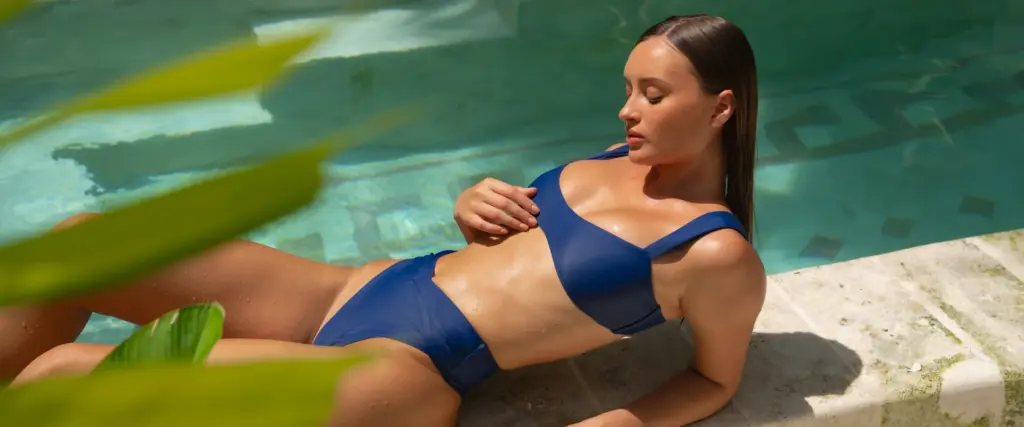
Swimwear MOQ Guide: What New Brands Need to Know MOQ is one of the most common questions new brands ask when planning their first collection. Before moving into production, it is important to understand how minimum order quantities work, what affects them, and how they shape the way a collection is developed.This swimwear MOQ guide explains what MOQ means in swimwear manufacturing, why it matters, and how new brands can plan their first range more realistically. What MOQ means in swimwear manufacturing MOQ stands for minimum order quantity. It is the minimum number of units a manufacturer requires in order to produce a style, colour, or order.In swimwear manufacturing, MOQ helps make production workable because materials, cutting, sewing, and finishing all need to be organised efficiently.For brands, MOQ affects: how many styles you can launch with how many colours you can offer how production costs are structured how your first collection should be planned Why swimwear MOQs vary There is no single MOQ that applies to every collection. Minimums depend on the structure of the order and the level of customisation involved.In swimwear, MOQ is often influenced by: number of styles number of colours fabric type whether fabrics are stock or custom printed versus solid fabrics trims and branding requirements A simple bikini collection using available stock colours may be easier to produce at lower minimums than a more complex collection using multiple custom prints and special trims. How fabric choice affects MOQ Fabric is one of the main things that shapes MOQ in swimwear.If a brand chooses: stock colours existing fabric bases fewer colour options the order is usually easier to manage.If the collection uses: custom colours custom prints more specialized fabric sourcing minimums often become higher because the material requirements are more specific.This is why fabric selection and MOQ planning usually need to be discussed together. How styles and colourways affect minimums MOQ is not only about the total number of garments. It is also affected by how that total is divided across the range.For example, the order becomes more complex when a brand has: many styles several colours per style low quantities in each variation A small number of focused styles is usually easier to manage than a large first range with too many options.For most new swimwear brands, a tighter launch collection tends to work better from both a production and costing point of view. Why MOQs matter for startup brands For early-stage brands, MOQ can shape nearly every production decision.It influences: first collection size number of colours fabric direction launch budget stock planning Understanding MOQ early helps brands avoid building a range that looks good in theory but is difficult to sample and produce realistically.This is one of the reasons why many new brands begin with a small group of strong styles instead of trying to launch too broadly. Ways to make your first swimwear order more manageable New brands can often reduce complexity by making practical decisions at the development stage.That may include: starting with fewer styles using stock fabric colours limiting colourways in the first run developing core best-selling silhouettes first simplifying trims and finishing details This does not mean making the collection less considered. It means building it in a way that suits the stage of the brand. MOQ and swimwear costing MOQ also affects cost. Smaller and more fragmented orders can lead to higher cost per unit, while a better-structured order is often more efficient.This is why MOQ should not be looked at in isolation. It sits alongside: fabric choice sample development style complexity production planning For most brands, MOQ becomes part of the bigger conversation around how to build a first collection that is both creative and commercially realistic. What to ask before moving forward Before finalising development, brands should understand: how minimums apply per style how they apply per colour whether stock colours help reduce complexity how custom prints or custom colours affect order size whether the first range is too broad for the planned production quantity These questions make it easier to plan the range in a more practical way. Final Thoughts MOQ is not just a factory number. It is part of how swimwear collections are planned, costed, and produced. When brands understand minimum order quantities early, they can make clearer decisions about styles, fabrics, and launch size.For most new swimwear labels, the strongest starting point is a focused collection with realistic quantities and a fabric direction that supports both development and production.If you are still shaping your range, the next step is usually to compare fabrics and decide which styles make the most sense for your first production run. Note.Because MOQs are usually calculated per bulk purchase order and then divided into pieces per style, colour and size, it is important to consider the size ratio when placing your order.In most swimwear markets, brands tend to sell more size S and M than size L. Unless your brand specifically targets larger sizes, ordering equal quantities of every size can sometimes lead to excess stock in larger sizes.For example, if the MOQ requires 3 pieces per size, colour and style, it may be more practical to order a ratio such as 5 S, 5 M and 3 L. This can help avoid selling out of smaller sizes too quickly while holding excess stock in larger sizes.
Designing Reversible Swimwear for Your Next Drop
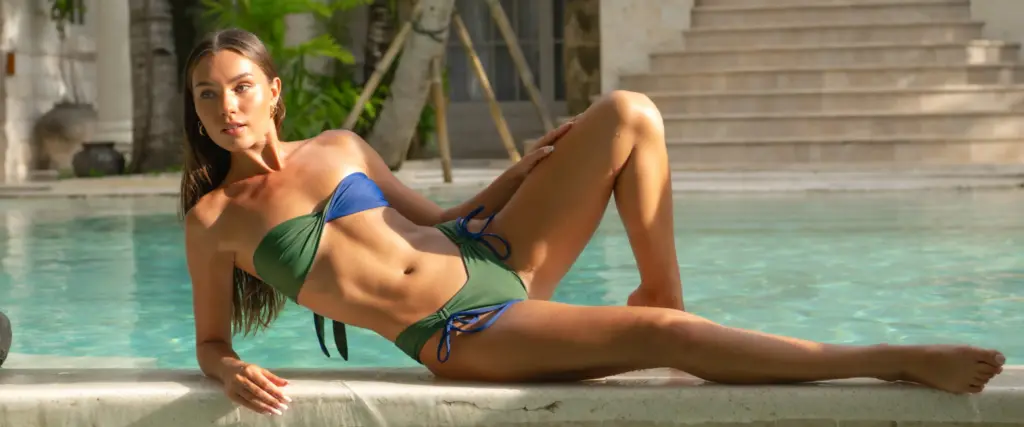
Designing Reversible Swimwear for Your Next Drop Reversible swimwear has become one of the most effective ways to add value to a collection without increasing complexity or cost for the end customer. By offering two considered colour stories in a single piece, each style delivers versatility, styling flexibility, and more ways to wear, while keeping pricing aligned with a standard bikini. In most cases, reversible styles cost the same or very close to the original design, making them a smart design choice rather than a premium add-on. Why Reversible Swimwear Adds Value Without Added Cost This added value comes from intention, not excess. When designed well, a single silhouette worn two ways gives customers freedom to adapt their look to different moods, settings, or styling preferences without needing additional styles. For brands, this means stronger perceived value per design, fewer SKUs to manage, and a more curated, thoughtful collection that feels elevated rather than overproduced. Colour Harmony as the Foundation of Reversible Design The key to achieving this lies in colour harmony. Reversible styles work best when both sides sit within the same colour family, ensuring the bikini looks refined and intentional whichever way it is worn. Pairing pastels with pastels and bold tones with bold tones creates balance, cohesion, and high wearability, resulting in designs that feel premium, considered, and easy for customers to commit to. Mixing Prints and Plains Successfully When combining a print with a plain, the most effective approach is to pull the predominant colour from the print and use it for the plain reverse side. This keeps the design cohesive and avoids one side feeling secondary. When presented on a website or in store, the colours harmonise naturally, creating a collection that feels coordinated and visually in tune. Designing Reversible Swimwear That Stands the Test of Time Exceptional reversible swimwear is never a gimmick. It is smart, thoughtful design. It gives customers more freedom to express themselves, your brand greater impact per style, and your collection a reputation for versatility and value that supports stronger sell through.Plan your reversible styles with care. Reviewing colour pairings early in the process helps ensure your final collection delivers balance, premium quality, and wearability on both sides. If you are new to the process, start with ourGetting started with custom swimwear Ready to Plan Reversible Styles? Ready to launch reversible swimwear for your next drop? Book a call with our team to refine your ideas, perfect your colour pairings, and move forward with clarity and confidence. FAQs Is reversible swimwear more expensive to produce? When executed with expertise, reversible styles are priced alongside standard bikinis yet deliver undeniable added value through versatility. Give your collection a competitive edge without added cost. What colour combinations work best for reversible swimwear? Prioritise combinations within the same family: pastels with pastels, strong colours with strong. This method ensures both sides stand out as equally desirable—boosting the success of your designs. Can I mix a print with a plain colour? Yes, and it’s a powerful option. By matching the plain side to your print’s predominant colour, you ensure a look that feels elevated, harmonious, and ready to win over your audience. Is reversible swimwear suitable for all styles? No. You need to check in with us, and we will inform you if your selected styles work wellas reversible styles. Is there anything I should be aware of? Yes, pairing strong colours with pastels may lead to colours leaching into each other in some rare cases, even with high-end fabrics from Carvico & REPREVE. Over-chlorinated pools are often the culprit, so be aware and check in with us first.
Why Now Is the Best Time to Start a Sustainable Swimwear Brand
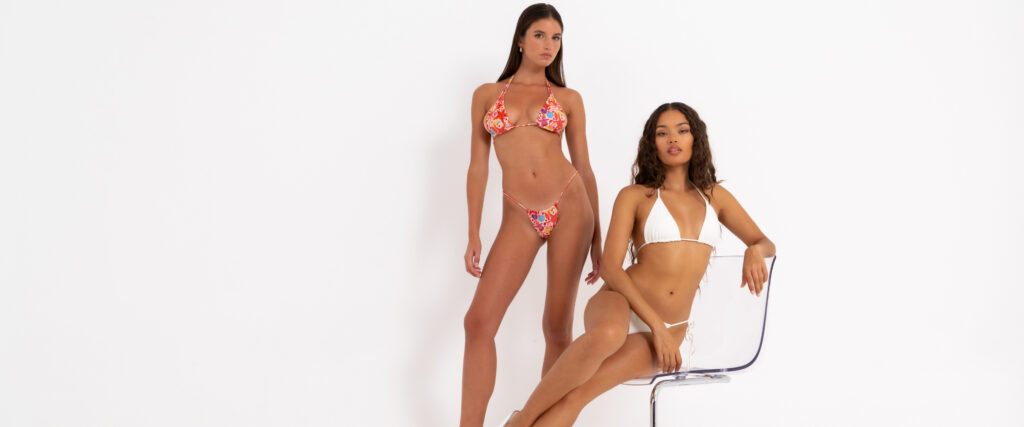
Why This Is the Right Time to Launch a Sustainable Swimwear Brand Launching a swimwear brand today is more achievable than most founders expect.The brands that grow are not the ones that wait for perfect timing. They are the ones that define their aesthetic clearly, understand their customer, and build collections with purpose. With access to specialised swim fabrics and experienced production teams, new labels can move from concept to launch far more smoothly than in previous years. Many founders say the same thing once they begin:They wish they had started earlier. Swimwear remains a strong global category Demand continues across multiple segments — minimal tanning styles, sculpting one-pieces, supportive fuller-bust fits, and resort-focused capsule collections.What works now is clarity. Brands that clearly define their customer — whether that’s high-fashion resort, performance swim, or confidence-driven coverage — build recognition faster. Cohesive design direction matters more than volume. Fabric selection starts with function Most founders do not begin with technical textile knowledge — and they do not need to.Swimwear fabric decisions start with performance requirements: Resistance to chlorine Durability in salt water Shape retention after repeated wear Soft hand-feel against the skin Sculpting and recovery Once those performance needs are defined, fabric selection becomes a structured process rather than guesswork.Today’s regenerated nylons and high-recovery blends make it possible to balance sustainability with durability, which was harder to achieve several years ago. Construction details elevate perceived value Modern swim collections benefit from refined finishing techniques: Clean bindings Invisible reinforcement Precision-cut silhouettes Elevated trim placement These details influence how a piece feels on the body and how it performs over time. Smaller production runs can now maintain high standards without requiring excessive scale. Visual presentation drives trust Clear, well-lit photography is critical in swimwear.Customers evaluate fit, coverage, cut from images alone. Consistent styling, accurate colour representation, and professional execution reduce hesitation and increase trust.Strong visuals do not require excess production — they require intention.
The Cost Breakdown of Producing High-Quality Swimwear: Insights from Swimwear Bali
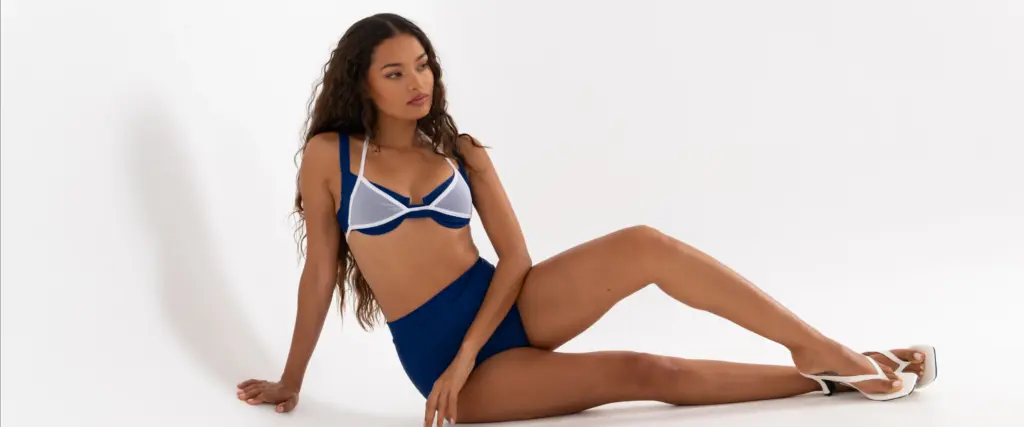
The Cost Breakdown of Producing High-Quality Swimwear: Insights from Swimwear Bali Understanding production costs is essential for launching or scaling a profitable swimwear brand. However, many new designers struggle to estimate accurate pricing because manufacturing involves multiple cost layers: fabrics, labour, development, printing, QC, packaging and shipping.As a Bali-based manufacturer supplying more than 300 global brands, Swimwear Bali provides a transparent look at the real cost structure behind premium swimwear production. 1. Fabric costs — why quality matters most High-quality swimwear begins with high-quality fabrics. Recycled performance fabrics from Italy and the United States deliver superior stretch recovery, colourfastness and longevity.Because Swimwear Bali holds Bali’s only tax-free Bonded KITE license, imported fabrics enter at a reduced landed cost — saving around 35 percent.This allows brands to access premium bases at price levels typically unavailable without large corporate buying volume. 2. Labour and construction Swimwear is detail-intensive. Skilled sewers use specialised machines such as flatlock, coverstitch, zigzag, strap machines and underwire machines.Swimwear Bali employs around 250 trained staff across approximately 150 machines, producing consistent results at scale.Labour cost includes: Cutting Sewing Construction Reinforcement Linings Finishing QC checks Packing Ethical factories like Swimwear Bali also include full benefits and fair wages. 3. Development and sampling Sampling is essential for accurate fits.At Swimwear Bali: Patterns are created digitally with 2D AutoCAD Samples are sewn in a dedicated sample studio Each piece undergoes a three-stage QC process Approval photos are sent before dispatch • DHL Express delivery typically arrives in 3 working days Development costs include: Pattern making Grading Specialist labour Sampling time Sample shipping 4. Printing costs Digital printing offers: High detail Eco-friendly inks Excellent colour reproduction Low minimums Print costs depend on: artwork complexity colour coverage fabric type Swimwear Bali offers both all-over and placement printing. 5. Packaging and branding Modern brands require retail-ready presentation.Swimwear Bali includes: Biodegradable bags Custom heat-press branding Barcodes Optional hardware & accessories 6. Shipping Swimwear Bali uses DHL Express worldwide.Shipping depends on: Order volume Box count Destination Seasons and peak periods Typical DHL delivery: ✓ 3–5 working days globally Producing premium swimwear is a multi-step process influenced by fabric choice, labour quality, sampling precision, sustainability and shipping.At Swimwear Bali, decades of experience, digital tools and a bonded import license allow brands to access high-grade materials at competitive pricing while maintaining consistent, repeatable quality.Understanding these costs helps brands plan smarter, price correctly and grow profitably.
How to Choose the Right Swimwear Manufacturer for Your Brand: A Complete Guide by Swimwear Bali
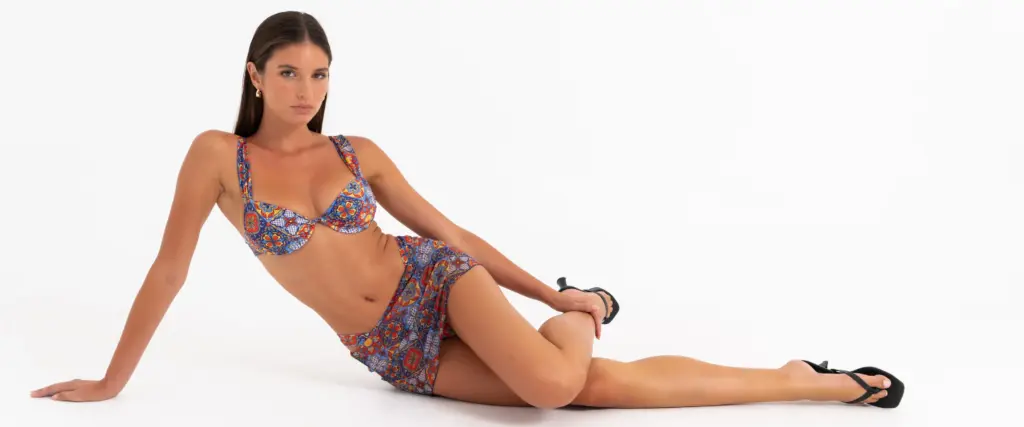
How to Choose the Right Swimwear Manufacturer for Your Brand: A Complete Guide by Swimwear Bali Choosing the right manufacturer is one of the most important decisions you will make when building or scaling a swimwear brand. Production quality, fabric selection, consistency, communication, and ethical standards all influence your final product and long-term success.As a Bali-based manufacturer with over 30 years of experience producing custom swimwear for brands across Australia, California, the United States, the EU, Southeast Asia and the UAE, Swimwear Bali has helped hundreds of labels navigate this decision.This guide explains how to evaluate a manufacturer and what to look for before committing to sampling or bulk production. 1. Evaluate their experience and production history Manufacturers with long operational history tend to have more stable production processes, trained teams and predictable outcomes. In the swimwear industry, precise sewing techniques, stretch handling and pattern accuracy all require years of refinement. Swimwear Bali operates under PT King Trading, founded in 1993, and produces between 50,000 and 60,000 pieces per month using a team of around 250 skilled staff. Brands should look for: consistent production volumes long-term operational stability specialised swimwear experience predictable turnaround times If you want to understand the full process, read our manufacturing overview here: custom swimwear manufacturing 2. Understand their fabric sources Fabric quality determines fit, stretch recovery, colourfastness and longevity. Many manufacturers rely on locally sourced fabrics that sacrifice performance to reduce cost. Swimwear Bali works exclusively with imported Italian and American recycled fabrics, held in stock in Bali. These fabrics offer superior hand-feel, retention and wear-life compared to local alternatives. Brands should ensure manufacturers offer: Premium imported fabrics Eco-certified bases In-stock colours for sampling Reliable print reproduction options 3. Check their licensing and import status In Indonesia, only bonded KITE factories are permitted to import fabrics tax-free. This significantly reduces the landed cost of high-grade imported textiles.Swimwear Bali holds Bali’s only tax-free Bonded KITE licence, reducing fabric import costs by around 35 percent and allowing brands access to premium materials at competitive pricing.Manufacturers without this licence often rely on lower-grade local fabrics. 4. Review their patterning and sampling process Accurate swimwear fit relies on professional patterning.Swimwear Bali uses 2D AutoCAD digital patterning for precise grading, minimising tolerance differences across sizes. Brands should look for: Digital patterning (not hand-drawn) Experienced sample specialists Clear QC checks Detailed approval process before bulk. For more on how our process works, see our full sampling process 5. Evaluate communication and support Brands need transparent communication and a dedicated point of contact.At Swimwear Bali, each client is assigned a dedicated swimwear merchant who oversees sampling, approvals and production. Look for: Fast response times Clear instructions Predictable workflow Ability to schedule calls when needed 6. Confirm ethical standards Modern consumers expect ethical production.Swimwear Bali: Provides fair wages Offers full staff benefits Uses biodegradable cassava bags Operates water purification Supports Bali Street Mums charity Finding the right manufacturer is a major step in building a long-lasting swimwear brand. With extensive experience, imported fabrics, Bonded KITE licence status and a fully integrated production floor, Swimwear Bali provides a reliable path from concept to finished collection.
Why Mixing Ready-to-Order Swimwear with Your Custom Designs is the Smartest Way to Start Your Brand
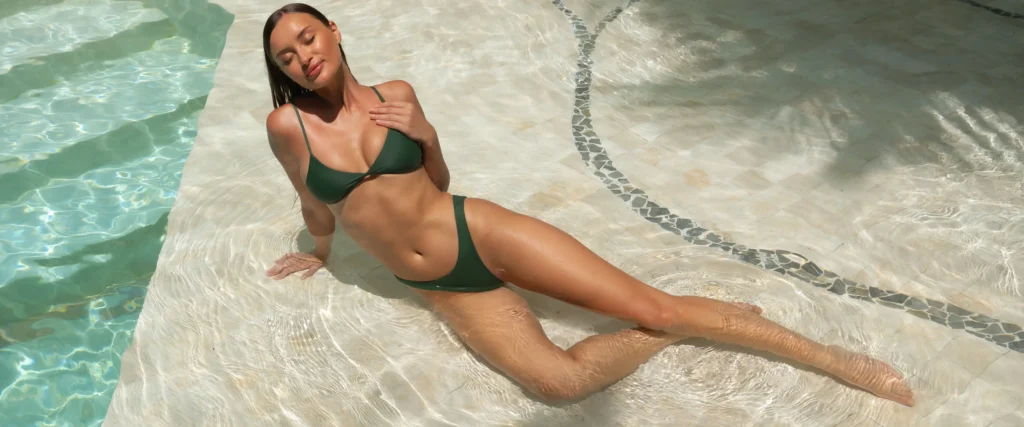
Why Mixing Ready-to-Order Swimwear with Your Custom Designs is the Smartest Way to Start Your Brand If you’re planning to launch a swimwear label, you don’t need to design every single piece from scratch. A faster, lower-risk path is to combine your own custom ideas with ready-to-order swimwear styles already shaped by market demand. This mix helps new brands save money, move quickly, and step into the market with confidence. 1. Know What’s Selling As a startup, it’s tough to guess which shapes will perform. An experienced swimwear producer sees daily orders from established labels and knows which cuts are being re-ordered for upcoming seasons. Tapping into that knowledge gives you a big advantage—you don’t need to reinvent everything, and you avoid wasting budget on slow sellers. 2. Save Time and Money with Pre-Made Styles Each ready-to-order piece has already been patterned and graded to international sizes. That means you skip the sampling stage for those items, paying only for the custom designs you develop. Production time is also shorter, since the patterns are already refined. Instead of waiting months, you could be ready to launch in just a few weeks. 3. Keep Up with Trends Swimwear moves fast—what was popular last summer may already feel old. Choosing designs created around current season trends helps you release a line that feels fresh and in demand, while your custom designs add originality. 4. Avoid Startup Overwhelm The swimwear market is crowded, with endless opinions on what cuts “sell best.” By leveraging proven shapes while incorporating your own ideas, you reduce stress and focus on building your brand, marketing, and connecting with buyers. 5. Premium Fabrics and Colours on Hand We stock one of Bali’s largest selections of recycled swimwear fabrics, including Carvico Vita (Italy) and REPREVE® (USA). With more than 100 plain shades ready to cut, production can begin the moment your PO is placed. For something unique, we also offer digital printing on recycled bases, producing sharp, retail-ready results without delay. 6. Low Risk, High Impact Blending ready-to-order designs with custom work lowers financial risk. You get proven shapes that sell, while still showing off your creativity in selected custom pieces. Ready-to-order doesn’t mean generic—fabric choices, colours, prints, and branding are all unique to your label. Example Starter Collection Mix A simple starting point for new brands could be: 2 ready-to-order bikinis in trending cuts (e.g. halter tops, cheeky bottoms, strapless bandeaus) 2 custom bikini sets 1 custom one-piece 1 mix-and-match style (e.g. a ready bottom paired with your own top) This balance gives you both market-proven sellers and your own brand identity. Ask Before You Start Not sure how to structure your first line? Ask yourself: Should I launch mainly with bikinis, one-pieces, or a mix? Do I want to focus on timeless cuts or trend-driven styles? Is speed most important (stock colours) or uniqueness (custom prints)? Should I sample everything, or go straight to bulk on proven designs? The answers shape your success—and we’ll guide you step by step. Ready to Begin? Browse our Ready-to-Order Catalogue, share your custom designs, or contact us on WhatsApp or email. Within a few days, you’ll receive pricing and support to build a collection that blends trend-driven pieces with your own creativity.
Be Your Own Boss in 2025 with Sustainable Swimwear and Activewear

Be Your Own Boss in 2025 with Sustainable Swimwear and Activewear Take Charge of Your Life You can stop dreaming and start doing. You can get out of the rat race. You can take control of your future, even in a world that feels full of uncertainty. If you love fashion, especially swimwear and activewear, this is the year for you. All you need is dedication, faith, a start-up investment, and the right partner to produce your orders. The rest is up to your drive and commitment, with some social media skills thrown in, and you’re already halfway to being your own boss, in charge of your future.Now picture this. You are no longer stuck in a routine. You are building a business around your lifestyle, not the other way around. Work from your favourite café, from the beach, or from home. Spend more time with family, travel when you want, and never again ask for permission to take time off. Why Swimwear and Activewear? The margins are incredible. From the wholesale price in Bali to your retail selling price, the markup often runs around 500 per cent. That means a bikini set that costs $20 to $30 can retail for $150 or more. Activewear follows the same pattern. You are not just selling clothing. You are selling confidence, lifestyle, and identity. With numbers like these, a small collection can snowball into a serious business if you put in the work.To make it crystal clear: produce 200 bikini sets at $30 a set, sell them at $150, and you generate $30,000 in sales from one collection. The same applies to sports tops, leggings, and training shorts, as well as athleisure wear. The Sustainable Boom The global sustainable fashion market is growing at a rate of roughly ten per cent every year and is on track to reach tens of billions of dollars by 2030. Recycled fabrics, such as ECONYL® regenerated nylon, REPREVE® recycled nylon, and Creora® Power Fit, are leading the shift. These materials transform waste, such as fishing nets and plastic bottles, into premium fabrics with the same stretch, feel, and durability as virgin fibres. Creora® Power Fit is especially valued for its high stretch and recovery, ensuring garments hold their shape while providing lasting comfort and support — perfect for activewear and swimwear.Consumers are demanding sustainable choices. Over 60% of Gen Z and millennials say they are willing to pay more for eco-friendly products. That means every bikini or pair of leggings you launch using recycled fabrics adds value and trust to your brand. You are not just starting a business; you are creating your future and bringing about positive change. Online Sales Are Exploding Global e-commerce sales are projected to reach $6.4 trillion in 2025, with social commerce adding another $1 trillion or more. Post about your recycled fabrics. Share the story of how your leggings are stitched for durability. Show the lifestyle behind your bikini collection. Content sells, and the platforms are designed to reward those who show up consistently.Imagine turning your social media into your storefront. Likes become orders. Followers become loyal customers. You can build a business without needing a physical shop, open twenty-four hours a day, and sell while you sleep. What It Takes Here is the truth. Success does not happen by accident. You must show up every day. Dedication is the real currency. Faith is the anchor when sales are slow in the first weeks. And yes, you need a start-up investment. That money secures your samples, locks in your first bulk run, and proves you are serious. Once the stock is in hand, your job is simple: sell.The good news is that you don’t need a fashion degree, a warehouse, or years of experience. You bring the vision, we handle fabrics, sizing, and production. You do not need to do this alone. We have guided hundreds of women worldwide, step by step, from their first samples to successful brands. Some started from their bedroom, others scaled into global names — all began with the same first step. You will feel part of a community that supports you every step of the way. Your Future Is Waiting That is not a dream. We often hear this story from new start-ups. They come back to us months or even years later, saying, “I wish I had started earlier.” The ones who leapt always say the same thing — “I am so happy I finally did. My only regret is not doing it sooner.”You will never look back. Gone will be the days of somebody telling you what to do. Gone will be the days of worrying that AI is going to take over your job. Gone are the days of uncertainty.Imagine waking up and checking your sales to see that you have earned more in one day than you used to earn in a week. That is the power of taking charge of your life and becoming your own boss in 2025. A True Story One young female entrepreneur in Finland, when asked, “What’s it like being your own boss now that you’ve been doing it for a year?” laughed and said, “You mean waking up every day and answering chats, talking to customers all day? It’s tiring and sometimes drives me crazy, but worth it. I would never go back to my day job, not even if I could.”She is right. If it were easy, everyone would do it. There are long days, and sometimes things feel frustrating. But with every sale, every happy customer, and every milestone, the rewards far outweigh the struggles. Freedom, ownership, and building something that is truly yours beats the nine-to-five every single time. 📩 Start today: email us or message us directly on WhatsApp
Stable U.S. Imports & Predictable Margins in 2026

Stable U.S. Imports & Predictable Margins in 2026 As a swimwear manufacturer in Bali, one of the most common questions we hear from U.S. brands is:“Are tariffs still affecting imports?”As of 2026, U.S. tariff rates on Indonesian swimwear are stable and clearly defined. There is no longer volatility, emergency rate shifts, or sudden trade changes disrupting production planning.What matters now isn’t tariff speculation.It’s manufacturing structure. Stable Trade Conditions. Structured Swimwear Production. Swimwear is primarily constructed using high-stretch synthetic fabrics designed for: Chlorine resistance Saltwater durability UV exposure protection Strong stretch recovery Sculpting fit retention These technical textiles often require controlled import handling.Our parent company holds the import licence and operates a bonded facility in Bali. This allows swimwear fabrics to be imported under regulated quota into a compliant production environment.For brands producing private label swimwear in Bali, this means: Predictable landed costing Clean export documentation No third-party import dependency Stable production timelines What This Means for Your Swimwear Margins With tariff rates now consistent, margin forecasting is straightforward.If your average retail price is $65 and your FOB production cost is $13, your margin structure remains strong — even when accounting for standard U.S. import duty.There’s no sudden 30–34% shock scenario anymore.Instead, you can: Maintain current retail pricing Plan seasonal launches confidently Run promotions strategically Scale production without margin panic The conversation has shifted from “trade risk” to “product quality and performance.”And that’s where it should be. What Hasn’t Changed As a bikini manufacturer in Bali, our production standards remain consistent: High-stretch swim construction Double-lined finishes Reinforced elastic recovery Shape retention testing On-time shipment schedules FOB pricing remains stable. Lead times remain predictable. Fabric access remains secured within our bonded quota allocation.Your focus can stay on brand growth — not trade uncertainty. Final Thought In 2026, global trade is stable again.The advantage isn’t in avoiding tariffs. It’s in working with a swimwear manufacturer in Bali that operates inside a structured, compliant system.If you’d like to review landed costing on specific swim styles or plan your next collection, we’re here to help.
Build a Sustainable Swimwear Brand—Without Overpaying for Quality
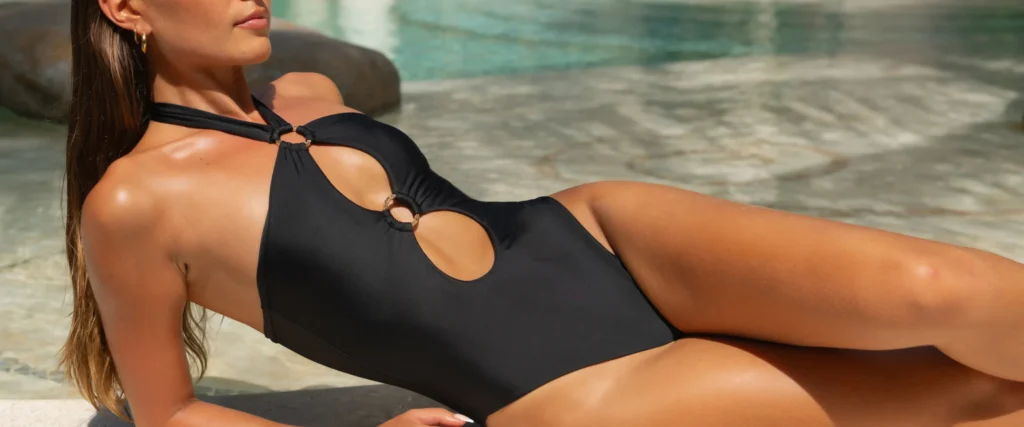
Sustainable Swimwear Manufacturer Bali — Build Quality Without Overpaying If you’re building a swim brand in 2026, sustainability isn’t optional.Your customers want: Recycled fabrics Long-lasting stretch Chlorine resistance UV durability A sculpting fit that holds after 20+ wears As a sustainable swimwear manufacturer in Bali, we help emerging and scaling brands create premium collections using certified European and U.S. performance fabrics — without inflated pricing or unstable lead times.Because in swimwear, fabric isn’t a detail.It’s the product. The Fabric Defines the Brand We work exclusively with certified regenerated nylon and performance elastane blends designed for: Saltwater durability Chlorine resistance Shape retention Strong stretch recovery Double lining stability Our most requested options include: Vita – ECONYL® Regenerated Nylon Made in Italy using regenerated nylon, Vita is known for: Long-term stretch recovery Resistance to UV and sun cream Soft yet sculpting hand feel Premium matte finish Ideal for elevated private label swimwear collections. Hawaii – REPREVE® Digital Print Base Designed for high-definition prints with strong colour retention. Soft stretch Sharp digital output Sustainable recycled yarn base Excellent recovery Perfect for statement resort collections. Reclaim Prime – Cost-Controlled Sustainable Base Developed for brands balancing sustainability and margin control. Comparable hand feel to premium Italian blends Strong elasticity Budget-conscious without compromising performance Structured Fabric Imports = Stable Production Our parent company operates a bonded import facility in Bali.That allows regulated fabric imports to move directly into controlled production — without third-party handling delays.For your brand, this means: Predictable costing Faster sampling Consistent fabric availability Cleaner export documentation Not hype. Just structured manufacturing. Why Emerging Swim Brands Stay With Us Clean finishing and reinforced swim construction Consistent elastic recovery testing Double-lined options Access to trending seasonal colour stocks Clear communication at every stage We support over 300 international brands each year — from first-time founders to scaling labels. Final Thought Building a sustainable swimwear brand isn’t about chasing trends. It’s about choosing the right fabric, the right structure, and the right production partner from the start. If you’re looking for a swimwear manufacturer in Bali who understands stretch performance, saltwater durability, and sustainable sourcing — we’re ready when you are.